Automated Integration of International Odds Feeds into Exchange Ecosystems
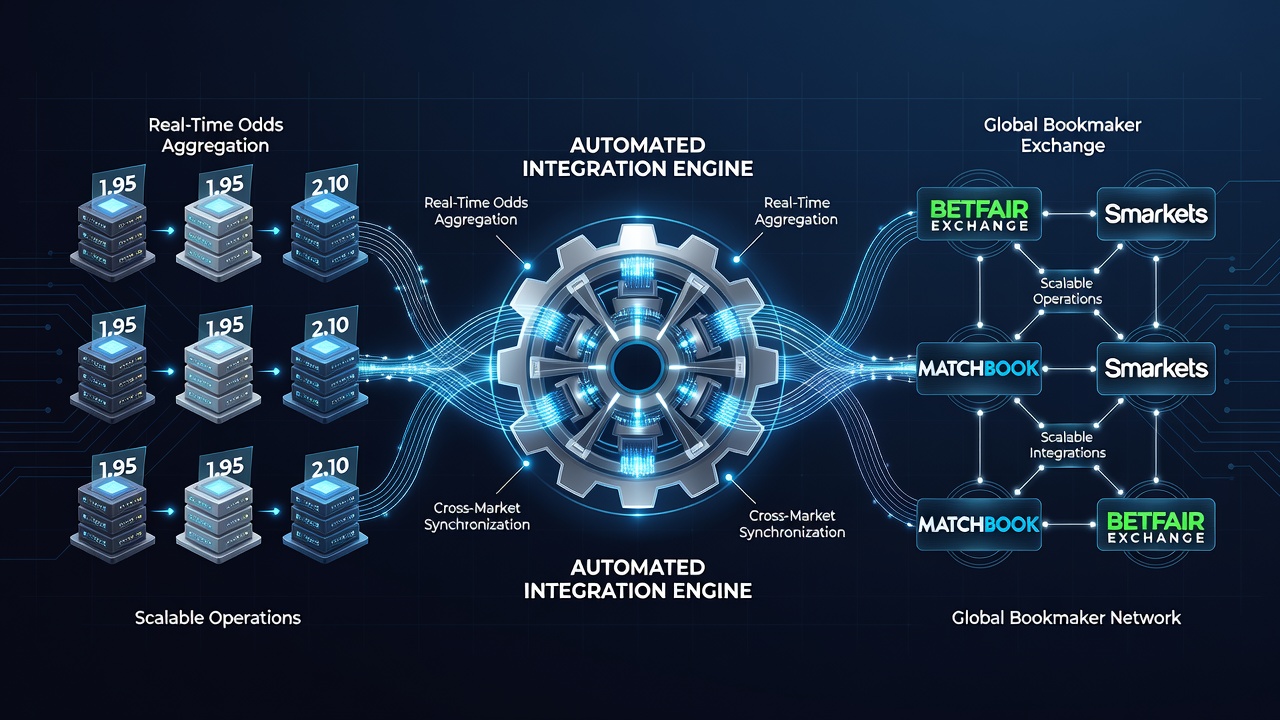
International bookmakers supply sharp lines on major sports while major betting exchanges provide deep liquidity pools, and automated systems now connect these sources through real-time data pipelines that support larger trading volumes without manual intervention. These platforms pull odds from Asian and European markets then route them directly into exchange order books where traders execute positions at scale.
Core Technology Behind the Connections
Application programming interfaces collect pricing data from bookmakers and normalize it for exchange formats before algorithms adjust for commission structures and latency differences. Data streams update every few seconds so that discrepancies trigger automated entries on the exchange side while hedging occurs back on the bookmaker accounts. Observers note that middleware layers handle currency conversion and risk limits simultaneously, allowing a single operator to manage positions across dozens of accounts.
Research indicates that latency under 200 milliseconds separates profitable links from those eroded by market movement. Engineers build redundancy into these pipelines so that a feed outage from one bookmaker shifts traffic to secondary sources without interrupting exchange activity. Those who've studied the architecture describe containerized microservices that scale horizontally during peak events such as major football tournaments.
Operational Scaling Through Automation
Manual arbitrage once limited traders to a handful of markets each day, whereas current systems process thousands of events across multiple continents. Volume increases because software monitors exposure thresholds and reallocates stakes according to pre-set rules rather than human decision speed. Figures from industry reports show some operations handling over 50,000 matched bets per week once pipelines stabilize.
What's interesting is how risk engines sit between the feeds and the exchange execution layer to prevent overexposure on correlated outcomes. A single parameter change can widen or tighten the acceptable edge across an entire portfolio. In July 2026 several mid-sized trading desks reported doubling their active market coverage after upgrading to these integrated setups.
Regional Variations in Data Sources
Asian bookmakers often post the tightest opening lines on football and tennis while European exchanges supply the deepest in-play liquidity. Automated bridges capture both sides and route the sharper price into the exchange depth first. According to data published by the European Gaming and Betting Association, cross-border data flows have grown steadily as regulatory clarity improves in multiple jurisdictions.

North American operators face different constraints because of state-level licensing, yet the same software frameworks adapt by adding geo-fencing modules. A study from the Alcohol and Gaming Commission of Ontario highlights how licensed entities now incorporate external odds feeds under strict reporting requirements. These adaptations demonstrate that the underlying automation works across regulatory environments when compliance layers are added.
Security and Compliance Layers
Encryption protects data in transit between bookmakers and exchanges while audit trails record every order placement and cancellation. Automated compliance checks flag unusual patterns before they reach the exchange matching engine. Those managing larger operations emphasize that logging every API call helps satisfy record-keeping demands without slowing execution.
Multi-factor authentication and role-based access control sit on top of the trading logic so that only authorized algorithms interact with live markets. Regular penetration testing targets the integration points where external feeds enter internal systems. Observers note that firms investing in these safeguards maintain higher uptime during high-traffic periods.
Future Trajectory
Developers continue refining machine-learning models that predict line movement based on historical feed behavior. These models sit alongside existing rule-based engines and adjust stake sizing dynamically. As more jurisdictions formalize rules around automated trading, the infrastructure that already exists will likely expand rather than require wholesale replacement.
Conclusion
Automated systems have established reliable pathways that move odds from international bookmakers into major exchange environments at volumes previously unattainable through manual methods. The combination of low-latency APIs, risk management layers, and regional compliance modules supports continued growth in operational scale. Data from multiple regulatory bodies and industry groups shows steady adoption across different markets, indicating the approach has moved beyond early experimentation into standard industry practice.