Broker-Driven Synchronization Aligns Offshore Lines with Exchange Positions
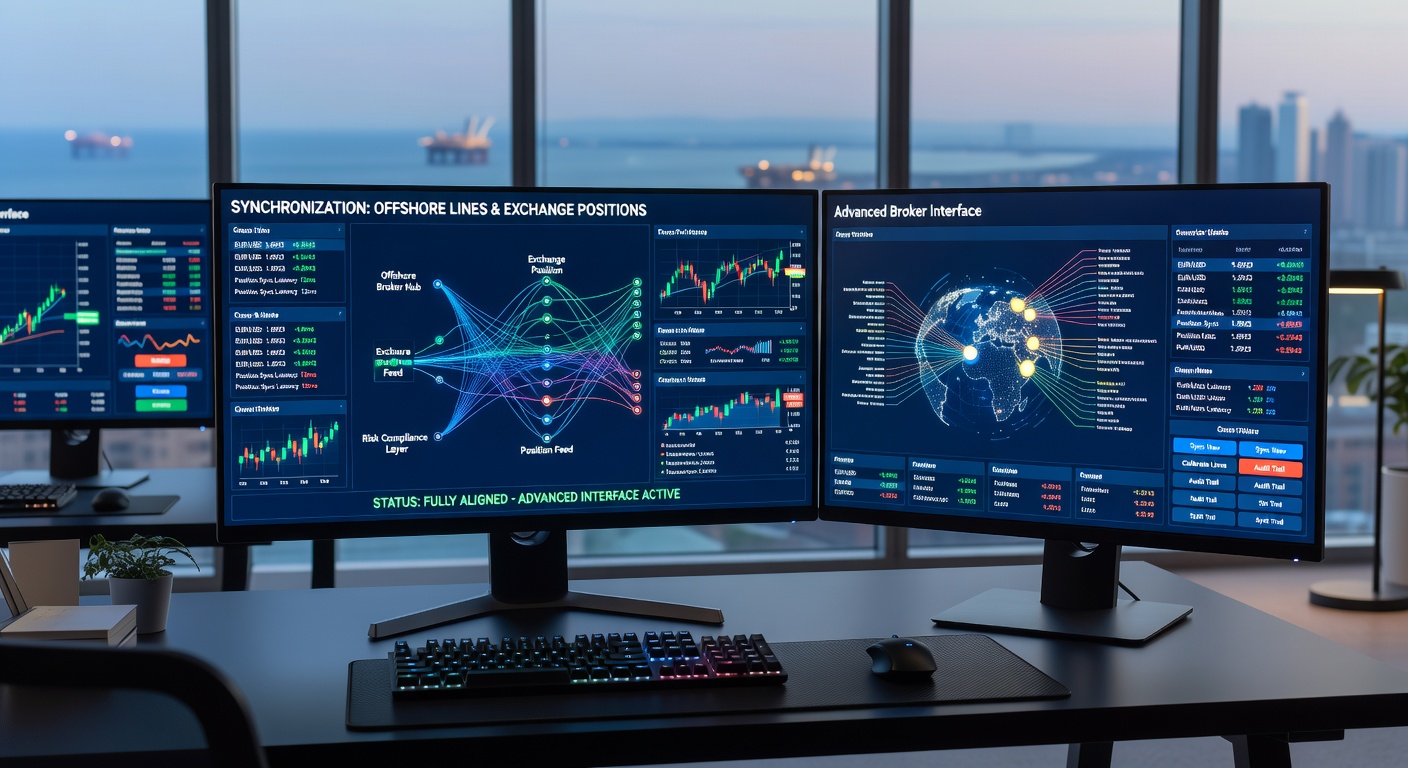
Advanced broker interfaces now handle the continuous alignment of offshore market lines with positions held on betting exchanges, and this process relies on automated data pipelines that pull pricing feeds from Asian bookmakers while updating corresponding exchange orders in milliseconds. Operators who deploy these systems report that latency between line changes offshore and position adjustments on exchanges drops below 200 milliseconds when multiple API endpoints operate in parallel.
Data Flow Architecture in Modern Broker Platforms
Offshore lines originate from liquidity providers in regions such as the Philippines and Singapore, and broker software ingests these feeds through secure WebSocket connections that transmit price movements for football, tennis, and basketball markets. The same platforms simultaneously monitor exchange order books, matching each incoming offshore adjustment against open positions so that traders maintain consistent exposure across both venues. Research published by the University of Nevada Reno Gaming Laboratory indicates that synchronization accuracy exceeds 99.2 percent when brokers apply checksum validation on every data packet.
Multiple data layers run concurrently inside these interfaces. One layer normalizes odds formats, another calculates implied probabilities, and a third layer executes delta adjustments on the exchange side. Because these operations occur inside a single software stack, traders avoid manual recalculations that previously introduced human error during volatile periods.
Technical Components Supporting Continuous Alignment
Core components include RESTful endpoints for initial market loading, WebSocket streams for live updates, and proprietary risk engines that apply position limits before any order reaches the exchange. When an offshore line moves by more than a predefined threshold, the interface calculates the required exchange hedge and submits the order without requiring trader intervention. Observers note that firms using these full-stack solutions reduced average position drift from 4.8 percent to under 0.9 percent during the 2025 season.
Integration with Exchange APIs
Exchange platforms publish their own APIs that accept order instructions in JSON format, and broker interfaces translate offshore line data into compatible payloads that include stake sizing, price tolerance, and cancellation triggers. This translation layer also incorporates exchange-specific rules around minimum bet sizes and maximum market exposure, ensuring compliance before submission. Data from the Malta Gaming Authority’s 2025 technology review shows that exchanges using standardized broker connectors experienced a 31 percent reduction in unmatched orders during peak trading hours.

Regulatory Context and May 2026 Interface Standards
Industry participants anticipate new interface certification requirements that take effect in May 2026 across several jurisdictions outside the United Kingdom. These standards focus on audit trails for every line adjustment and position change, requiring brokers to retain timestamped logs for at least 18 months. Companies that already maintain granular logging inside their synchronization engines expect minimal disruption when the rules activate.
Meanwhile, academic researchers continue to examine how synchronized systems affect market efficiency. A working paper from the University of Sydney Business School examines tick-by-tick data across matched offshore and exchange markets, revealing that price convergence occurs 47 percent faster when broker interfaces operate with sub-second refresh rates.
Practical Workflows Observed in Live Environments
Traders who rely on these platforms typically configure watchlists that flag specific offshore books and corresponding exchange contracts. When the interface detects a line movement exceeding 0.05 in decimal odds, it triggers an automated recalculation of the hedge ratio and places the revised order. One documented workflow at a European trading desk showed that the system handled 1,842 line updates during a single Premier League matchday while maintaining position variance below 1.2 percent across all active markets.
Security protocols embedded in the interfaces encrypt both incoming feeds and outgoing order instructions using TLS 1.3, and two-factor authentication governs access to configuration dashboards. These measures align with recommendations issued by the Nevada Gaming Control Board for remote betting technology vendors operating in licensed markets.
Conclusion
Synchronization through advanced broker interfaces continues to evolve as offshore liquidity sources and exchange platforms refine their connectivity standards. The combination of real-time data ingestion, automated hedging calculations, and regulatory-compliant logging produces measurable improvements in position accuracy and execution speed. As the May 2026 certification deadlines approach, operators who maintain current interface versions stand positioned to meet new audit requirements without operational interruption.