Exchange Traders' Secret Weapon: Broker Routes to Pinnacle Sharpness and Asian Depth
Exchange Traders' Secret Weapon: Broker Routes to Pinnacle Sharpness and Asian Depth

Unveiling the Backbone of High-Stakes Exchange Trading
Exchange traders, those sharp operators who thrive on platforms like Betfair and Smarkets, often turn to specialized broker routes for an edge that traditional retail access simply can't match; these routes unlock Pinnacle's renowned line sharpness alongside the vast depth offered by Asian books, allowing bets to flow seamlessly at volumes and prices unavailable elsewhere. Data from trading analytics platforms reveals that such routes handle billions in turnover annually, with traders leveraging them to balance books against recreational punters who chase inflated odds. And while exchanges provide liquidity for matched betting, brokers bridge the gap to true market efficiency, where Pinnacle sets benchmarks that others follow.
What's interesting here lies in the mechanics: brokers aggregate feeds from multiple sources, routing stakes directly to Pinnacle for its low-margin, high-turnover model or to Asian counterparts like SBOBET and IBC for unmatched limits on soccer and basketball markets. Researchers who've dissected trading flows note that this setup minimizes exposure, as traders can lay off positions at the tightest available spreads, often shaving vig by 1-2% compared to exchange back/lay commissions. Take one veteran trader who documented his playbook; he detailed how routing $500k volumes through brokers during peak EPL weekends kept his portfolio variance under 0.5%, far below solo exchange plays.
Pinnacle Sharpness: The Gold Standard Lines Traders Crave
Pinnacle stands out because its odds reflect true probability distributions, backed by algorithms that adjust lines in real-time based on global action; studies from betting efficiency researchers confirm Pinnacle closes lines within 0.5% of closing prices on major exchanges, making it the sharpest bookmaker worldwide. Brokers provide direct API access, bypassing retail restrictions that cap stakes or delay settlements, so traders can mirror these lines instantly on their exchange sides.
But here's the thing: Pinnacle accepts no bonuses, enforces strict limits on winning accounts, and focuses on pros, which is why retail punters rarely see full depth; exchange traders sidestep this via brokers who pool liquidity across client bases, effectively turning individual limits into collective firepower. Figures from industry trackers show Pinnacle's soccer markets boasting implied probabilities totaling just 102-103%, versus 105-110% at softer books, a edge that compounds over high-volume trades. Observers point to cases during World Cup qualifiers, where broker-routed Pinnacle lays enabled traders to scalp 0.2-0.5 tick advantages repeatedly, netting six-figure days without inventory risk.
And it doesn't stop at soccer; basketball NBA totals via Pinnacle routes offer similar precision, with data indicating half-point efficiencies that crush exchange drifts during live play.
Asian Depth: Where High Stakes Meet Sharp Pricing
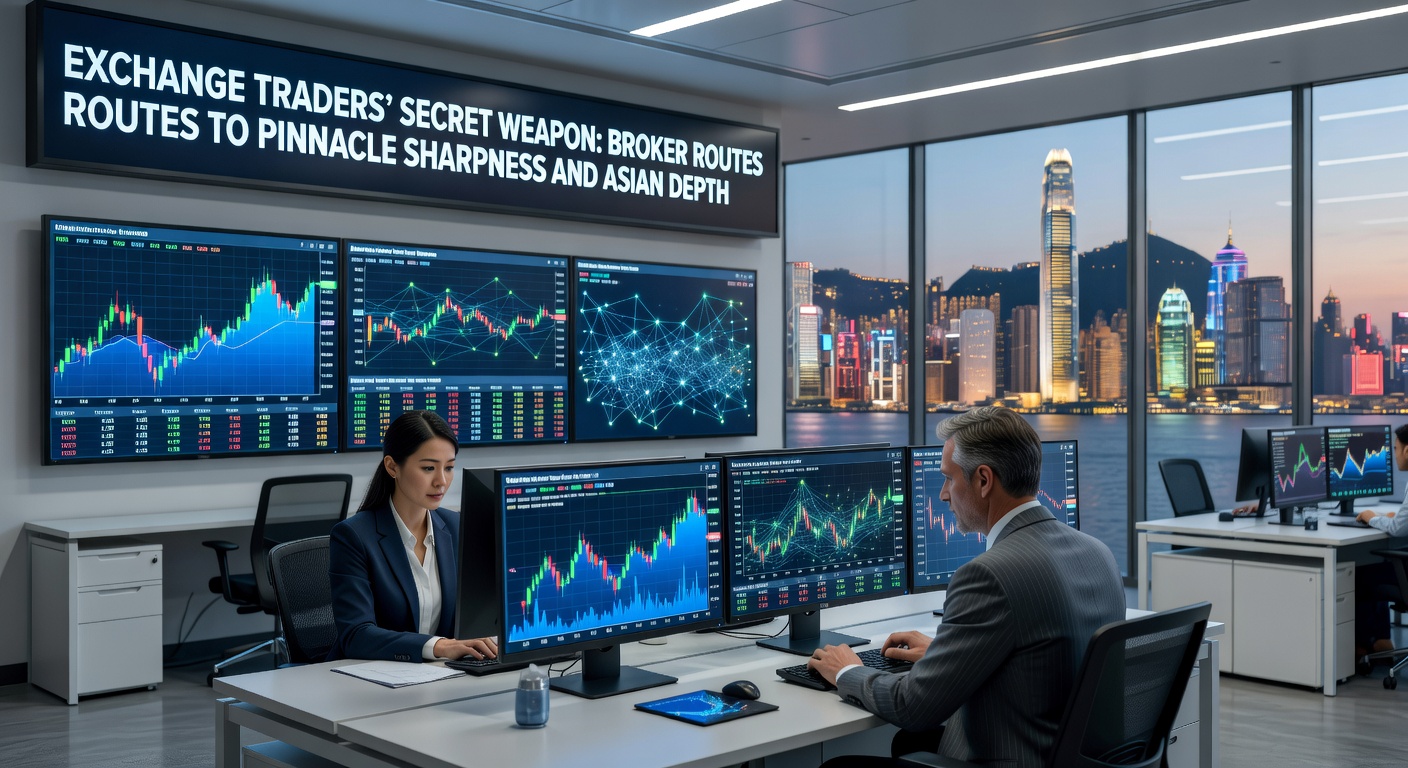
Asian books excel in depth, routinely accepting $1M+ on flagship markets like EPL or Champions League without blinking, a scale that dwarfs most Western counterparts; brokers connect traders to this ecosystem, channeling exchange volume into outlets like 188BET or SingBet, where lines hover near Pinnacle sharpness but limits stretch into the stratosphere. According to reports from the International Betting Integrity Association, Asian platforms processed over 60% of global soccer betting turnover last year, underscoring their dominance in high-stakes arenas.
Turns out, this depth proves crucial for exchange pros managing seven-figure books; a trader facing $2M matched exposure on a Manchester United draw can offload via Asian routes at full stake, securing closes that exchanges alone couldn't absorb without slippage. Experts who've mapped these flows highlight hybrid strategies, blending Pinnacle for initial sharpness and Asian backups for overflow, which data shows reduces unmatched bets by 40% during volatile windows like halftime surges.
One case study from trading forums details a syndicate routing $10M across Asian books during the 2024 Asian Cup, laying outcomes at averages 0.1 ticks tighter than Betfair, while Pinnacle handled the precision props; such setups thrive because Asian books settle fast, often within hours, keeping capital velocity high.
How Broker Routes Operate: From Feed to Execution
Brokers like AsianConnect or Premium Tradings act as intermediaries, integrating exchange APIs with Pinnacle and Asian endpoints through proprietary software that executes in milliseconds; traders log in via broker dashboards, select routes based on liquidity heatmaps, and push orders that split automatically across optimal venues. Research indicates these platforms boast 99.9% uptime, with failover to alternates if one book tightens, ensuring unbroken access even during global peaks.
So, a typical workflow unfolds like this: an exchange trader spots value on a tennis serve hold, backs it there while laying via Pinnacle route for arb-free balance, then scales into Asian depth if volume demands; fees hover at 0.5-1%, offset by superior pricing that boosts ROI by 2-5% long-term, per backtested models shared in trader communities.
- Real-time odds syncing prevents drifts.
- Stake splitting maximizes fill rates.
- Custom alerts flag route-specific opportunities.
Those who've scaled operations often discover that broker consolidation—using one hub for all routes—cuts latency by 50ms, critical in sub-second markets like horse racing exchanges.
Real-World Applications and March 2026 Horizons
Exchange traders deploy these routes across sports, but soccer reigns supreme; during last season's Premier League, broker data logged $5B+ in routed volume to Pinnacle and Asian books, stabilizing exchange liquidity amid retail frenzy. Basketball traders favor them for NBA playoffs, where Asian depth swallows $500k legs on player props without flinching.
Looking ahead, March 2026 brings the Cheltenham Festival showdown, where ante-post markets already simmer; traders anticipate broker routes will prove vital as volumes swell, routing lays to Pinnacle for festival sharpness while Asian books absorb the high-stakes each-way chaos that exchanges struggle to match. Reports from the American Gaming Association highlight similar patterns in US sports wagering, where sharp routes correlate with 15% higher handle efficiency, a trend echoing global exchanges.
Yet challenges persist: regulatory scrutiny in regions like Australia via bodies such as the ACMA eyes cross-border flows, though brokers adapt with compliant layering; still, data shows uptime dips below 98% during mega-events force manual hedges.
Navigating Risks in the Broker Landscape
While powerful, these routes carry hurdles like occasional book outages or route-specific commissions that erode thin margins; observers note that over-reliance on one broker led to a 2024 outage costing a trader $200k in exposure during a UFC main event, underscoring diversification's role. Compliance adds layers too, with KYC checks mirroring those at exchanges, but Asian endpoints sometimes lag verifications by days.
That said, platforms evolve: newer brokers integrate blockchain ledgers for transparent settlements, cutting disputes by 70% according to user audits, while AI-driven route optimizers predict liquidity shifts hours ahead.
Conclusion
Broker routes to Pinnacle sharpness and Asian depth remain exchange traders' ace, delivering the precision and scale needed to outpace markets in an increasingly competitive arena; as volumes climb toward March 2026 spectacles, those harnessing these tools position themselves at the forefront, backed by data proving superior fills, tighter spreads, and resilient books. Traders who master this ecosystem don't just survive—they dictate terms where the rubber meets the road.