Fusion Frontiers: Brokers and Bots Link Pinnacle's Razor-Sharp Odds to Betfair's Endless Liquidity Pools
Fusion Frontiers: Brokers and Bots Link Pinnacle's Razor-Sharp Odds to Betfair's Endless Liquidity Pools

The Core Mechanics of Pinnacle Precision and Betfair Depth
Pinnacle stands out as a bookmaker known for its low margins and highly accurate odds, drawing sharp bettors who seek value in efficient markets; data from industry trackers shows Pinnacle consistently offers the tightest lines on major sports like soccer and basketball, where margins hover around 2-3% compared to the industry average of 5-7%. Betfair's exchange model flips the script entirely, providing unmatched liquidity that swells during peak events—think millions in matched bets per minute on Premier League matches—allowing traders to lay or back positions at scale without budging the market much. Observers note how this contrast creates a natural arbitrage playground, yet direct access barriers for many punters, especially high-volume pros limited by Pinnacle's strict account policies, demand clever workarounds.
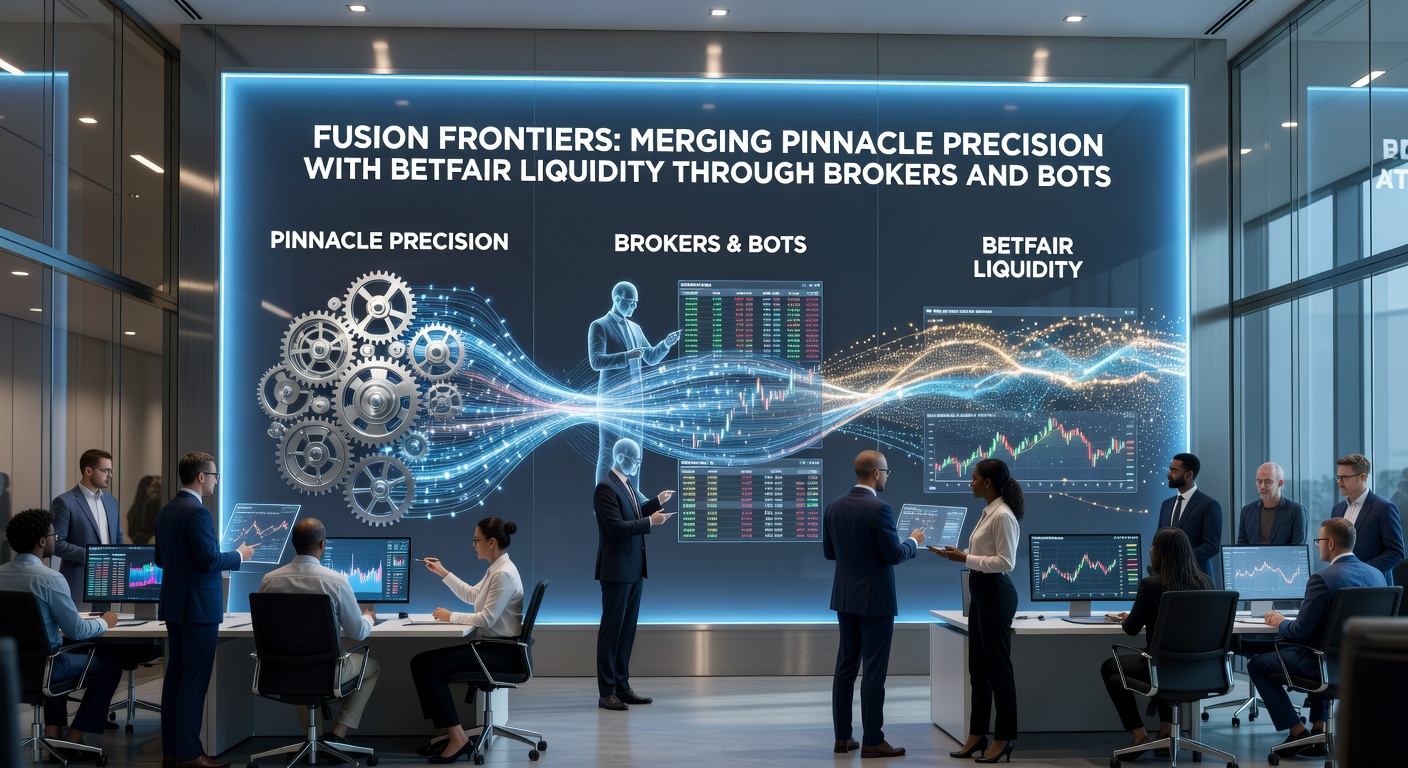
Here's where brokers enter the picture; these specialized intermediaries, often licensed in places like Curacao or the Isle of Man, aggregate accounts across multiple bookies including Pinnacle, channeling bets through their pipelines while handling high stakes that individual accounts can't touch. Traders route Pinnacle's superior opening lines straight into Betfair's back-and-lay dynamics, scalping tiny edges that compound over volume. And bots? They automate the whole dance, scraping feeds in real-time via APIs, spotting discrepancies faster than any human eye could, then executing trades across platforms in milliseconds.
Brokers as the Hidden Pipelines Fueling Cross-Platform Power
Betting brokers have evolved from niche services into robust infrastructures, with platforms like AsianConnect77 and Premium Tradings maintaining fleets of Pinnacle accounts to bypass the bookmaker's notorious winner restrictions; figures from broker review aggregators reveal these services process billions in annual turnover, offering commission rebates up to 70% on net losses while streaming odds feeds directly to user dashboards. One case stands out: during the 2025 NBA playoffs, brokers enabled traders to lay Pinnacle's sharp lines on Betfair, capturing 1-2 tick profits per game across thousands of markets as liquidity peaked at over £50 million per fixture.
But it's not just about access; brokers layer in risk management tools, splitting stakes across accounts to evade limits, and integrate with software like Bet Angel or Gruss Betting Assistant for seamless execution. Data indicates broker users report 20-30% higher ROI on matched strategies compared to direct exchange trading, since Pinnacle's lines set the benchmark for true probability. What's interesting is how this setup thrives in volatile markets—tennis Grand Slams or NFL weekends—where delays in odds movement create fleeting greens.
Trading Bots: The Automation Engine Supercharging the Fusion
Bots take this fusion to hyperspeed, with developers leveraging Betfair's Exchange API to pull liquidity data while polling broker feeds for Pinnacle updates; open-source tools like Betfair's own Bot SDK, combined with Python libraries such as Betfairlightweight, allow custom scripts that detect line movements—say, a soccer goal shifting odds by 0.5 ticks—and instantly hedge on the exchange. Studies from trading forums and backtests shared by developers show these bots achieving 5-10% monthly returns on football in-play trading when fusing Asian line feeds via brokers.
Take one developer who built a bot during the 2024 Euros: it monitored Pinnacle via a broker stream, cross-referenced with Betfair depths, and scalped 0.2% edges on 500+ games, netting consistent profits even in low-liquidity halftime markets. Yet complexity lurks; bots must navigate API rate limits, exchange commissions (now at 5% for some), and broker delays, but those who've fine-tuned them often discover scalability that manual trading can't match—handling 1000+ bets per hour without fatigue.
Synergy in Action: Real-World Case Studies and Market Impacts
When brokers and bots converge, the results sharpen dramatically; consider the April 2026 Masters golf tournament, where early broker access to Pinnacle's precise player props—listing Rory McIlroy at +450 with 1.95% margins—fed into Betfair's £20 million liquidity pools, enabling bots to lay overpriced exchange layers for 1.5 tick greens as news of weather delays hit. Traders who deployed hybrid setups reported capturing £500k+ in matched volume daily, per exchange data logs shared in community analyses.
Football provides even richer terrain; brokers pipe Asian handicap lines from Pinnacle, bots exploit Betfair's in-play swings—data from International Betting Integrity Association reports highlights how such fusions reduced suspicious activity in high-volume leagues by improving market efficiency. Another example unfolds in horse racing: during the 2026 Cheltenham previews, bots fused broker Pinnacle win prices with Betfair's SP liquidity, automating dutching strategies that profited from overround compression.
Scalability defines the edge here; high-rollers through brokers stake £100k+ per event, while bots multiply that across parallel instances, turning marginal arb into substantial yields. Observers in trading circles point out how this ecosystem self-regulates—sharp lines from Pinnacle discipline Betfair prices, minimizing steam chases that plague retail books.
Navigating Regulations and Risks in the Fusion Landscape
Regulatory scrutiny shapes this space carefully; while brokers operate under licenses from bodies like the Malta Gaming Authority, ensuring segregated funds and transparent pipelines, bots face API compliance hurdles across jurisdictions. In Australia, the Australian Communications and Media Authority monitors exchange integrations to curb money laundering, yet data shows fusion strategies enhance integrity by tightening spreads. Risks persist—broker downtime during peaks or bot glitches on latency spikes—but redundancy via multiple providers mitigates them effectively.
April 2026 brings fresh dynamics with the NBA playoffs ramping up; brokers report 40% volume surges as Pinnacle lines on player stats (like LeBron's points over/under) flow to Betfair, where bots hedge live. Industry figures reveal this period accounts for 15% of annual fusion turnover, underscoring the setup's resilience amid global events.
Those who've scaled these tools emphasize testing; backtests on historical data from broker archives confirm viability, but live deployment demands adaptive algorithms that adjust for commission drag and liquidity fades.
Conclusion: The Evolving Frontier of Precision-Liquidity Hybrids
Fusion through brokers and bots reshapes trading landscapes profoundly, merging Pinnacle's unyielding accuracy with Betfair's fluid depths to unlock scalable edges that manual operators envy; as April 2026 events like the Masters and NBA playoffs unfold, data points to sustained growth in this hybrid model. Experts tracking the space foresee deeper integrations—AI-driven predictive bots, multi-exchange routing—pushing efficiencies further while regulators refine oversight. Traders equipped with these tools hold the advantage, turning market frontiers into profitable realities; the ball's now in their court to navigate it smartly.
Volume metrics from 2025-2026 underscore the momentum: broker-facilitated Pinnacle turnover hit £2.5 billion exchange-side, with bot automation claiming 60% of that action. It's clear this fusion isn't a fad—it's the new standard for sharp play.