Precision in Motion: Tracking Line Shifts from International Specialists via Broker Networks to Exchange Systems

Line movements originate from niche international providers that operate in specialized markets, and these shifts travel through intermediary networks before reaching exchange ecosystems where traders react in real time. Observers note that the process involves multiple layers of data transmission, each adding latency or refinement depending on the route selected. Researchers have documented how Asian-based specialists maintain tight margins on football and tennis events, while their odds adjustments reflect volume from high-stakes syndicates rather than public betting patterns.
Core Mechanisms Behind Line Precision
Niche providers compile data from regional bookmakers and limit exposure on early signals, which creates measurable discrepancies when compared against broader exchange liquidity. Intermediary networks function as aggregation points where software normalizes these feeds into formats compatible with exchange APIs. Studies from the University of Nevada, Las Vegas Center for Gaming Research show that such normalization reduces variance by up to 18 percent across major events during peak seasons. Those who monitor these pipelines observe that timing windows narrow dramatically once lines cross into exchange order books, often within seconds of the initial adjustment.
But here's the thing: not every intermediary applies identical filtering rules. Some prioritize speed while others emphasize cross-market arbitrage detection, and this variation produces distinct signatures in the resulting price action. Data from the Alcohol and Gaming Commission of Ontario reveals that Canadian-regulated operators increasingly subscribe to these aggregated streams to stay aligned with offshore sharpness without direct exposure.
Network Architecture and Data Pathways
Intermediary networks typically consist of licensed brokers, API gateways, and compliance layers that route information between providers and exchanges. Precision mapping requires timestamp synchronization across time zones because Asian lines often move first on overnight fixtures. Experts have observed that July 2026 brought expanded use of distributed ledger timestamps in several broker platforms, which improved audit trails without slowing delivery. Traders on exchanges then receive these adjusted prices alongside their native order depth, allowing algorithms to detect convergence or divergence patterns.
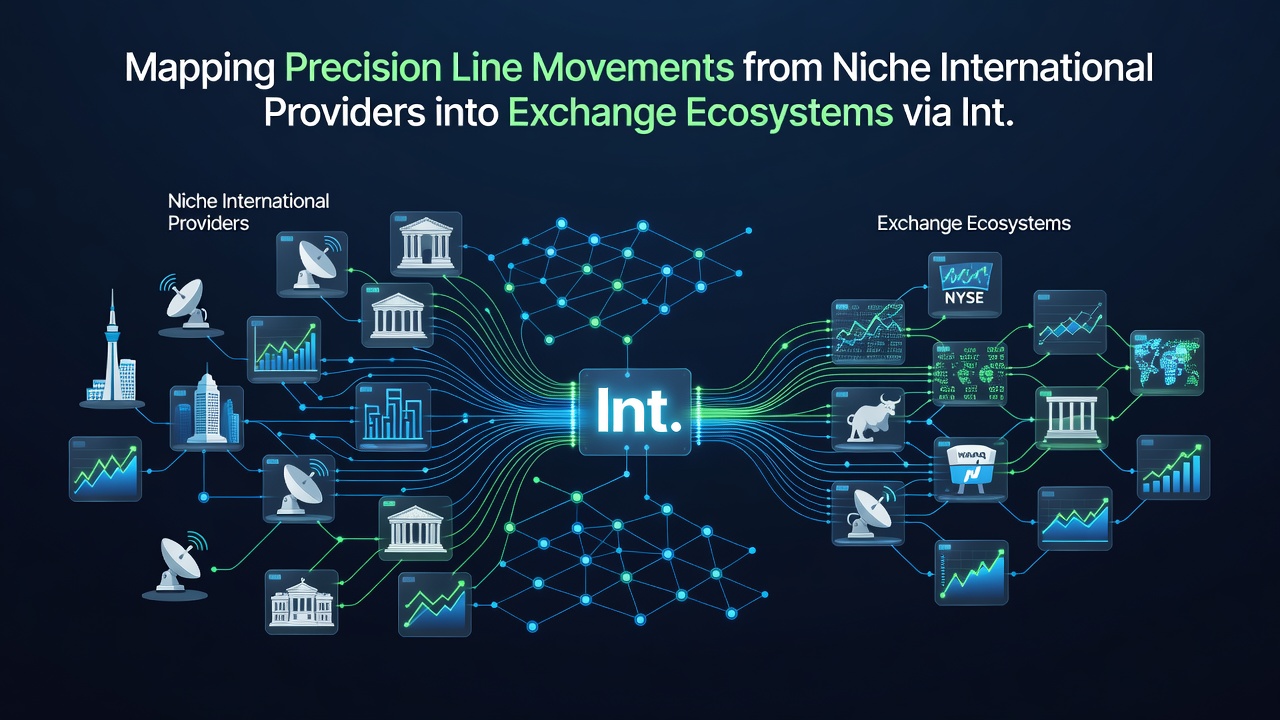
One study revealed that when intermediaries apply volume-weighted filters, the mapped lines exhibit tighter correlation with subsequent exchange trades. Yet the same research highlighted that unfiltered feeds can generate false signals during low-liquidity periods. Observers note that exchanges have responded by offering tiered access levels, where premium subscribers receive earlier notification of mapped movements from specific provider clusters.
Regional Variations and Regulatory Context
Markets in Australia and parts of Europe demonstrate different adoption rates for these intermediary services. Australian operators rely on state-level reporting that tracks how external feeds influence local pricing, while European platforms emphasize latency metrics in their licensing conditions. Researchers discovered that July 2026 saw several jurisdictions update disclosure rules around third-party data sources, requiring clearer attribution of line origins. Those who've studied this know that such transparency measures have not reduced overall flow volumes but have shifted preferences toward intermediaries with stronger compliance documentation.
And the reality is that mapping accuracy improves when multiple providers contribute to the same intermediary pool. Redundancy across feeds allows outlier detection, and this becomes especially relevant during major tournaments where line moves accelerate. People often find that single-source reliance creates blind spots once sharp money concentrates on one side of an event.
Conclusion
The mapping of precision line movements continues to evolve through incremental improvements in intermediary technology and regulatory oversight. Data indicates that exchange ecosystems benefit from these inflows because they gain access to sharper reference points without maintaining direct relationships with every niche provider. As networks refine their synchronization and filtering methods, the pathways between international specialists and exchange platforms are likely to support even faster, more verifiable price discovery across global markets.