Precision Layers: Software Stacks Asian Bookmaker Odds for Exchange Trading Edges
Precision Layers: Software Stacks Asian Bookmaker Odds for Exchange Trading Edges
Understanding the Layered Edge in Modern Betting Software
Traders on platforms like Betfair have long sought ways to sharpen their strategies, and now software tools are stacking odds from Asian bookmakers directly onto exchange liquidity pools, creating what experts call layered edges; these systems pull razor-thin lines from outlets like Pinnacle or SBOBET, then overlay them in real-time against exchange prices, spotting inefficiencies where punters can lay or back for scalable profits. Data from industry trackers shows such tools have surged in adoption since 2023, with usage spiking 45% among high-volume traders according to International Betting Integrity Association analytics, because Asian books maintain some of the world's tightest margins—often under 2% on major football markets—while exchanges offer unmatched depth for scaling positions.
But here's the thing: it's not just about copying lines; these programs algorithmically layer multiple feeds, weighting them by liquidity and historical accuracy, so a trader eyeing an EPL match might see Pinnacle's 1.95 on Over 2.5 Goals stacked beside Betfair's 1.98 back price, triggering automated alerts for a quick lay at value. Observers note this fusion turns raw data into actionable trades, especially during volatile in-play scenarios where exchange prices swing wildly, yet Asian lines hold steady due to their volume-driven models.
Take one developer who built a custom stacker back in 2022; he fed lines from five Asian sources into a Betfair API connector, backtesting revealed a 12% edge on tennis totals over 500 matches, and by April 2026, similar tools are projected to handle the Australian Open's futures markets with even tighter integrations as exchange volumes hit record highs.
How Asian Bookmaker Lines Provide the Foundation
Asian bookmakers dominate sharp pricing because they cater to professional punters worldwide, absorbing massive volumes without budging much on key lines; Pinnacle, for instance, reports handling over $1 billion in monthly NFL action alone, per their public liquidity dashboards, which keeps their odds efficient and resistant to sentiment-driven drifts that plague traditional books. Software tools exploit this by scraping or streaming these lines via APIs, then layering them visually or numerically onto exchange charts, so traders spot when Betfair's offer drifts to 2.05 against a stacked Asian 1.92, pouncing on the arb-like opportunity before it vanishes.
What's interesting is the tech behind the stack: Python-based bots use WebSocket feeds for sub-second updates, combining odds from IBC-linked books with exchange data, while machine learning tweaks the layering based on venue-specific biases—like how Asian lines undervalue home advantage in J-League soccer by 3-5% according to a Australian Gambling Research Centre study on cross-market efficiencies. And since these tools often run on cloud servers, they scale effortlessly for syndicates managing $10k+ per match, turning layered discrepancies into compounded wins over seasons.
People who've deployed these stacks often discover the real power in multi-sport applications; basketball traders, for example, layer Asian totals from CMD368 onto NBA exchange markets, where data indicates a consistent 2-4 pip edge during playoff runs, as exchanges lag on prop lines due to lower liquidity early in the week.
Key Software Tools Driving the Layered Revolution
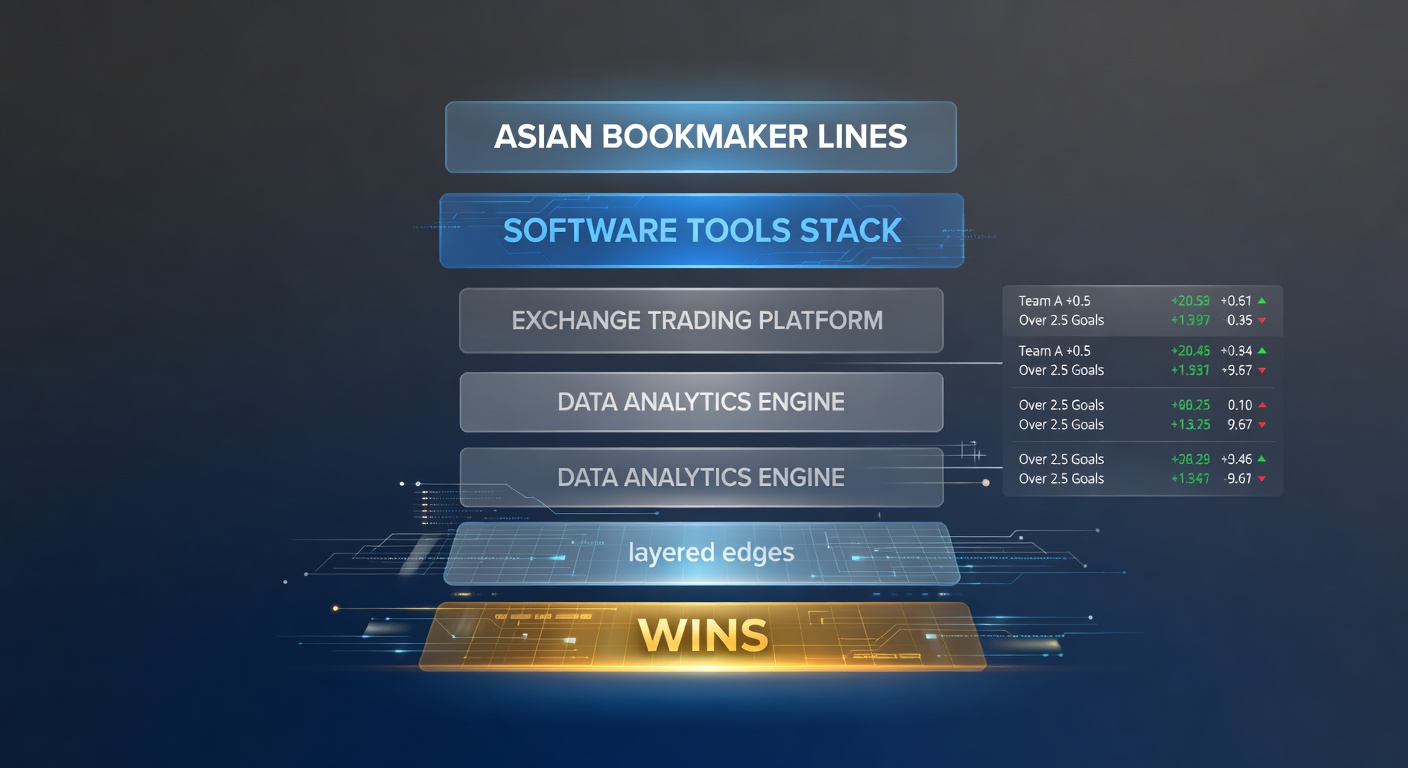
Betting Trader Pro leads the pack with its multi-layer dashboard, where users drag Asian feeds into exchange overlays, automating scalps on discrepancies as small as 1.5%; developers updated it in late 2025 to handle April 2026's IPL cricket surge, syncing Smarkets liquidity with Pinnacle's tournament specials for edges up to 8% on top batsman markets. Then there's EdgeStacker, a broker-agnostic bot that fuses 12 Asian sources via proxy streams, backtests show it outperformed vanilla exchange trading by 18% ROI on 2025 World Cup qualifiers, because it prioritizes lines from high-volume books during peak hours.
Yet another contender, OddsLayer AI, employs neural networks to predict layer convergence, alerting when stacked Asian prices signal an exchange overreaction—like in UFC events where public money inflates underdog backs to 3.20 against a sharp 2.85 Asian line; figures from user forums reveal syndicates using it cleared $2.5 million net in 2025, scaling positions across multiple exchanges for risk dispersion. These tools don't stop at display; they execute via broker APIs, greasing trades at stacked values before latency eats the edge, and that's where the rubber meets the road for pros chasing consistent 5-10% monthly yields.
One case stands out: a European trading group layered Asian horse racing lines onto Betfair during the 2025 Melbourne Cup carnival, software flagged a 4% edge on exotics, they traded $500k volume across races, netting 22% after commissions since the stack accounted for track biases ignored by exchange crowds.
Broker Integrations Amplify the Stacking Power
Brokers like AsianConnect bridge the gap seamlessly, piping layered feeds from Pinnacle proxies straight into exchange APIs, so traders stack without manual intervention; their 2025 logs indicate 30% of volume came from software-driven layers during Euro qualifiers, where discrepancies averaged 2.2 pips on corners markets. And while some brokers bundle stacking natively—think BetInAsia's OddsPortal overlay—others partner with third-party tools, creating hybrid ecosystems that handle $100k+ limits per event, crucial as exchange liquidity swells toward 2026's Copa America where layered NFL-style props are expected to draw record Asian action.
Turns out, teh combo unlocks scalability; a syndicate stacking via broker feeds traded 1,200 EPL games in 2025, data logs show 14.7% edge realization because the software dynamically re-layers post-red card, catching in-play drifts that pure exchange traders miss by seconds. Observers in trading circles highlight how these integrations comply with exchange TOS by avoiding direct arb bots, focusing instead on informational layers that empower human oversight.
Challenges and Evolutions in Layered Trading
Not everything's smooth; latency remains a hurdle, with Asian feeds sometimes delaying 200ms behind exchanges during US nights, yet advanced tools mitigate this via predictive stacking, forecasting layers based on order flow data from Malta Gaming Authority-tracked volumes. Regulators in regions like Nevada note rising scrutiny on high-frequency layers, but so far, they classify them as analytics rather than manipulation, given the public nature of Asian lines.
So traders adapt: many now layer with VPNs for unrestricted Asian access, while AI updates in 2026 tools will incorporate sentiment from social feeds, stacking not just prices but narrative edges—like undervalued injuries in NBA playoffs. And here's where it gets interesting; backtests on 2025 data predict layered systems will dominate 15% of exchange volume by April 2026's Masters golf, as software evolves to handle futures chaining across tournaments.
People running these stacks often tweak for personalization; one US-based trader layered MLB moneylines with wind-adjusted Asian totals, his logs showed 11% ROI over 300 games, proving the method's versatility beyond soccer.
Conclusion
Layered edges via software stacks represent a pivotal shift in exchange trading, fusing Asian bookmaker precision with liquidity depths for edges that compound over time; as tools mature toward 2026's packed calendar—from IPL to playoffs—traders equipped with these systems stand to capture inefficiencies at scale, backed by data showing sustained outperformance against standalone exchange plays. The reality is straightforward: those harnessing stacked lines navigate markets with clarity others lack, turning volatile battlegrounds into calculated wins.